
Colorful outfit accents are the easiest way to make your look feel intentional without committing to a head-to-toe bright outfit. If you keep buying “fun” pieces that never leave your closet, it’s usually not because they’re too loud, it’s because they’re hard to combine on a random Tuesday.
The good news, accents are forgiving. You can add color in small doses, test what feels like “you,” and still look polished at work, on a weekend errand run, or at dinner.
This guide stays practical, why accents sometimes look mismatched, how to choose a color direction fast, and a handful of formulas you can repeat so getting dressed stops feeling like a creative project.
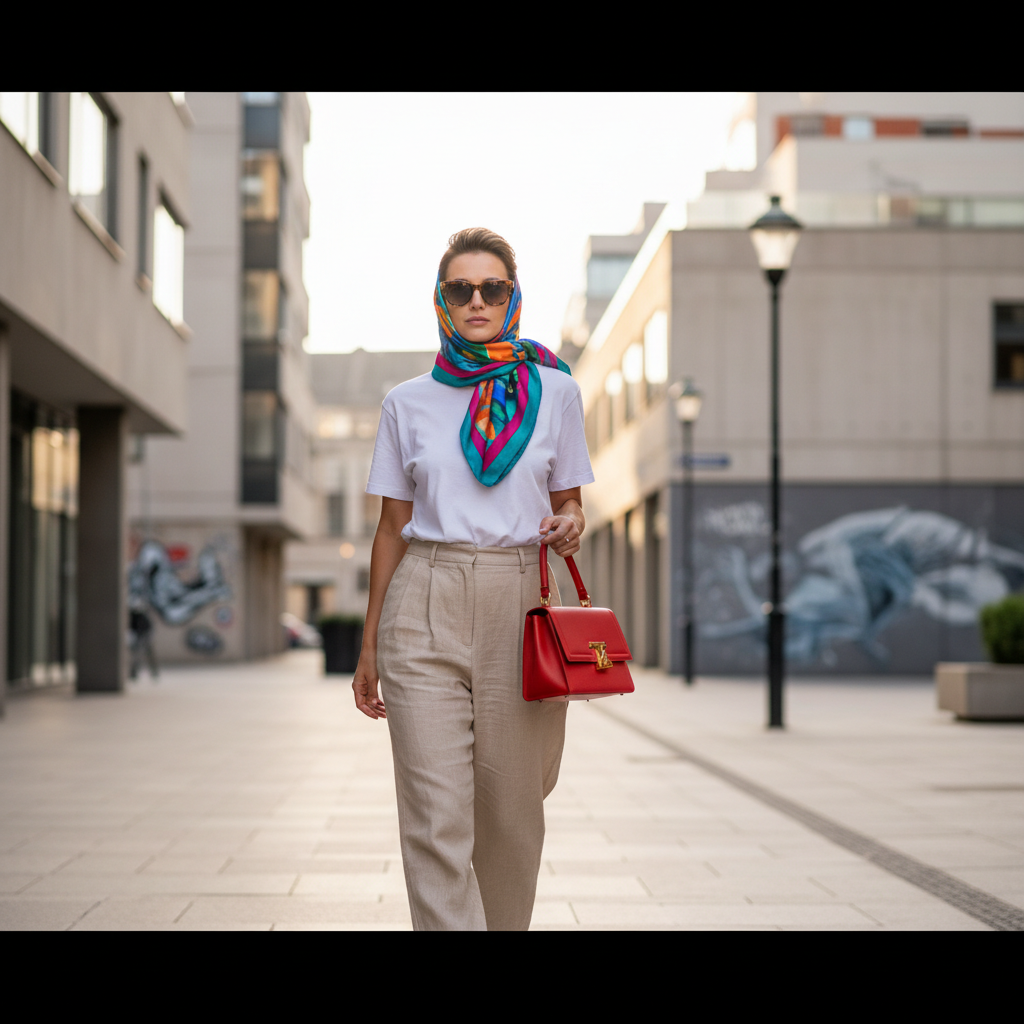
Why colorful accents sometimes look “off” (and it’s not you)
Most styling frustration comes from a few predictable issues, not a lack of taste. Once you can name the problem, the fix is usually simple.
- Too many competing focal points, bright shoes, bright bag, bright earrings, all shouting at once.
- Mismatch in color temperature, a warm orange next to a cool icy pink can feel unintentionally “clashy.”
- No anchor color, without a neutral base (denim, black, navy, white, tan), accents have nowhere to land.
- Different style languages, sporty neon sneakers with a formal wool coat can work, but it needs a bridge item.
According to Pantone, color perception is heavily influenced by surrounding colors and lighting, which is why the same accent can look chic indoors and loud in direct sun. Keep that in mind when you judge an outfit in your mirror versus outside.
A quick self-check: which “accent person” are you?
Before buying more pieces, figure out the level of color you’ll actually wear. Pick the description that feels most accurate right now, not your fantasy self.
- Level 1: Color-curious, you like color on others, but you feel exposed wearing it.
- Level 2: Controlled color, you want a pop, but still need the outfit to read “classic.”
- Level 3: Playful, you’re fine being noticed, but you still want outfits to look put-together.
- Level 4: Maximal, you enjoy mixing brights and prints, balance matters more than restraint.
If you’re Level 1 or 2, start with accessories and one accent area. If you’re Level 3 or 4, you’ll get more mileage from color-to-color combos and pattern support.
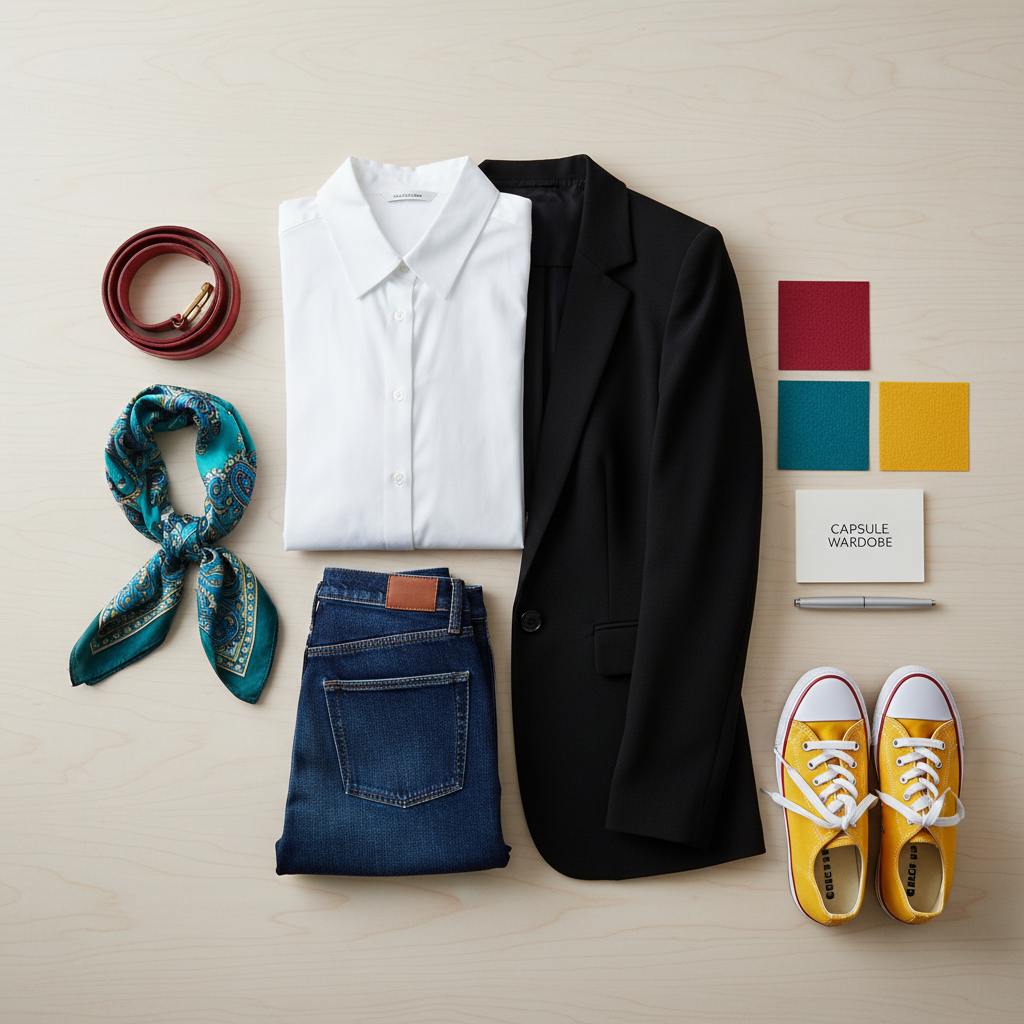
Simple formulas that make colorful accents look intentional
If you only remember one thing, it’s this, accents look better when they follow a repeatable structure. Here are the ones that work in real life.
1) The “one pop” rule
Keep the outfit mostly neutral, add one standout accent. Think black jeans + white tee + cobalt sneakers or a bright crossbody.
2) The “echo” rule (repeat the color once)
Use the same accent color twice in small ways so it reads as a choice. Example, a green bag + green hair clip, or red sneakers + red lip.
3) The “third color” rule
Wear two calm base colors (like navy + cream), then introduce one lively accent (like coral). This helps colorful outfit accents feel clean rather than busy.
4) The “print counts as many colors” shortcut
If you wear a patterned scarf or top, pull one shade from it for a bag, shoes, or earrings. The print does the coordination work for you.
Where to place color: easiest accent pieces (ranked by effort)
Not all accents feel equal. Some are low-risk and instantly wearable, others change the whole vibe. Here’s a practical ranking.
| Accent Area | Effort Level | Why it works | Easy examples |
|---|---|---|---|
| Bag | Low | Stands out without affecting fit | Red tote, emerald crossbody |
| Shoes | Low–Medium | Feels playful, especially with denim | Yellow flats, pink sneakers |
| Jewelry | Low | Small dose near the face | Turquoise studs, colorful bangles |
| Scarf/Hat | Medium | Frames your face, strong focal point | Printed scarf, bright beanie |
| Belt | Medium | Defines waist, adds “styled” signal | Cobalt belt over denim, red belt on black dress |
| Jacket/Coat | High | Big color area, more commitment | Green trench, pink blazer |
If you want fast wins, start with a bag or shoes, they’re the quickest way to test colorful outfit accents without feeling like you’re “wearing a costume.”
Outfit ideas you can copy (work, weekend, night)
These are meant to be boringly repeatable. Swap the accent color based on what you own.
For work (polished, not loud)
- Navy blazer + white button-down + straight-leg jeans + burgundy loafers
- Black midi dress + emerald earrings + matching emerald clutch
- Gray sweater + black trousers + cobalt belt + neutral shoes
For weekend (easy, casual)
- White tee + light-wash denim + bright sneakers + simple gold hoops
- Neutral hoodie set + colorful cap + contrasting socks
- Denim jacket + black leggings + hot pink bag
For dinner or events (a bit more “styled”)
- All-black outfit + red heels + red lip (classic for a reason)
- Slip skirt + fitted knit + teal statement earrings
- Monochrome beige outfit + orange scarf + neutral boots
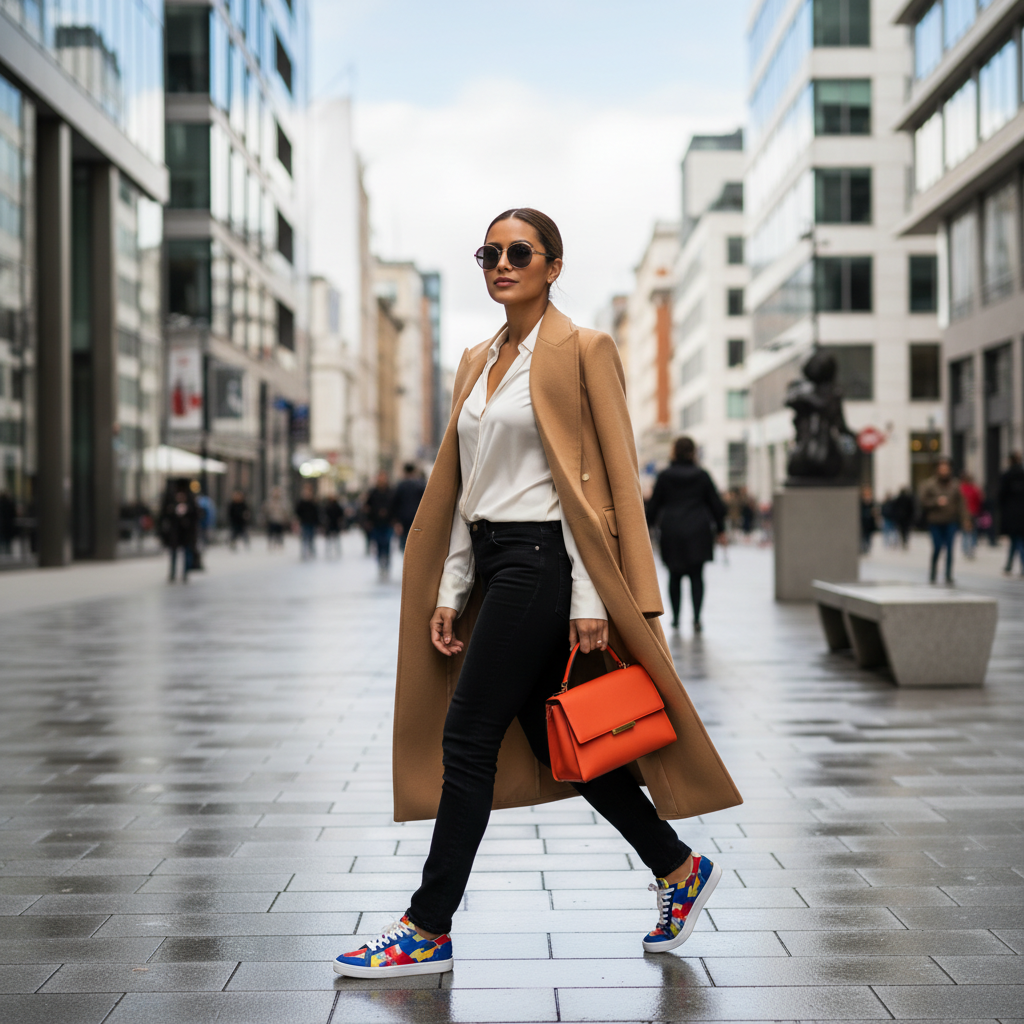
Practical steps: build an accent palette you’ll actually wear
A common mistake is buying random bright items in random shades. Instead, give yourself a small “accent menu.” It makes mornings easier.
- Pick 2–3 accent colors you like on yourself, not just on a hanger. If unsure, start with one “bright” and one “deep.”
- Choose 2 neutrals you wear most, like black + denim, or navy + cream.
- Create a repeat rule, either “one pop only” or “echo once.” Stick to it for two weeks.
- Buy connectors, a striped tee, a scarf with multiple colors, or sneakers with two tones can help bridge outfits.
Key point to remember, colorful outfit accents work best when your closet has a little internal logic, you don’t need a giant wardrobe, you need fewer random choices.
Mistakes that make accents look accidental (and quick fixes)
- Everything is “statement”, pick one hero item, let the rest support it.
- Ignoring proportions, a tiny bright bag can get visually lost with a large oversized coat, scale up the accent.
- Forgetting texture, shiny satin plus shiny patent plus glitter can feel chaotic, mix matte with one shine.
- Over-correcting with more color, if it feels off, remove one piece before adding another.
If you’re styling for a workplace with a strict dress code, it’s smart to keep accents near the edges, shoes, jewelry, bags, and to avoid anything that could be read as safety-related (for certain job sites) or overly distracting. When in doubt, ask your manager or HR for guidance.
Conclusion: make color feel easy, not stressful
When you treat accents like a system instead of a one-off creative decision, getting dressed gets calmer. Start with one pop, repeat it once if you want extra polish, and let neutrals do the heavy lifting.
If you want a simple next step, choose one accent color you love and build three outfits around it this week, work, weekend, and night. That little repetition is how colorful pieces turn into “your style,” not a closet experiment.
FAQ
How do I wear colorful outfit accents without looking too bright?
Keep the base neutral and limit yourself to one focal point, like a bag or shoes. If it still feels loud, pick a deeper version of the color, burgundy instead of bright red, forest instead of neon green.
What colors are easiest to mix with neutrals?
Many people find red, cobalt blue, emerald, and mustard easy with black, white, denim, navy, and beige. The “best” choice depends on your undertone and what you already wear most days.
Do accents have to match exactly?
No, exact matching can look dated in some contexts. A better approach is coordination, keep colors in the same family or repeat a shade once in a small way.
How many accent colors can I wear at once?
In most everyday outfits, one to two accents feels clean. If you want three, let a print carry multiple shades and keep the rest of the outfit quiet.
Are colorful shoes harder to style than a colorful bag?
Usually a bag is easier because it doesn’t change the outfit proportions, but colorful shoes can be surprisingly wearable with denim and simple basics. If you walk a lot, comfort matters more than the color story.
What if my accent color clashes with my skin tone?
Try moving the color away from your face, wear it on shoes or a bag, or switch to a softer or deeper shade. If you have sensitivities to certain dyes or materials, it’s reasonable to consult a professional or patch-test as appropriate.
How can I make bright accessories look more “grown-up”?
Choose structured shapes, better materials, and cleaner lines, then pair them with classic pieces. A bright, minimal leather bag reads more polished than a bright bag with heavy logos and extra hardware.
If you’re building a small wardrobe and want colorful outfit accents to feel effortless, it can help to map your neutrals, pick a tight accent palette, and shop for connectors instead of random statement pieces, a simple checklist or closet audit often saves time and avoids regret buys.