
How to organize keys with keychain usually comes down to one thing: your current setup is doing too much, and it shows every time you dig, jingle, or scratch something you didn’t mean to.
Most people don’t need “more keychain stuff,” they need a system, one that keeps essentials close, removes dead weight, and makes the keys you use daily the easiest to grab without looking.
In this guide, you’ll sort keys by use, pick a keychain style that matches your routine, and set up a layout that stays tidy even after you add a new key or swap cars.
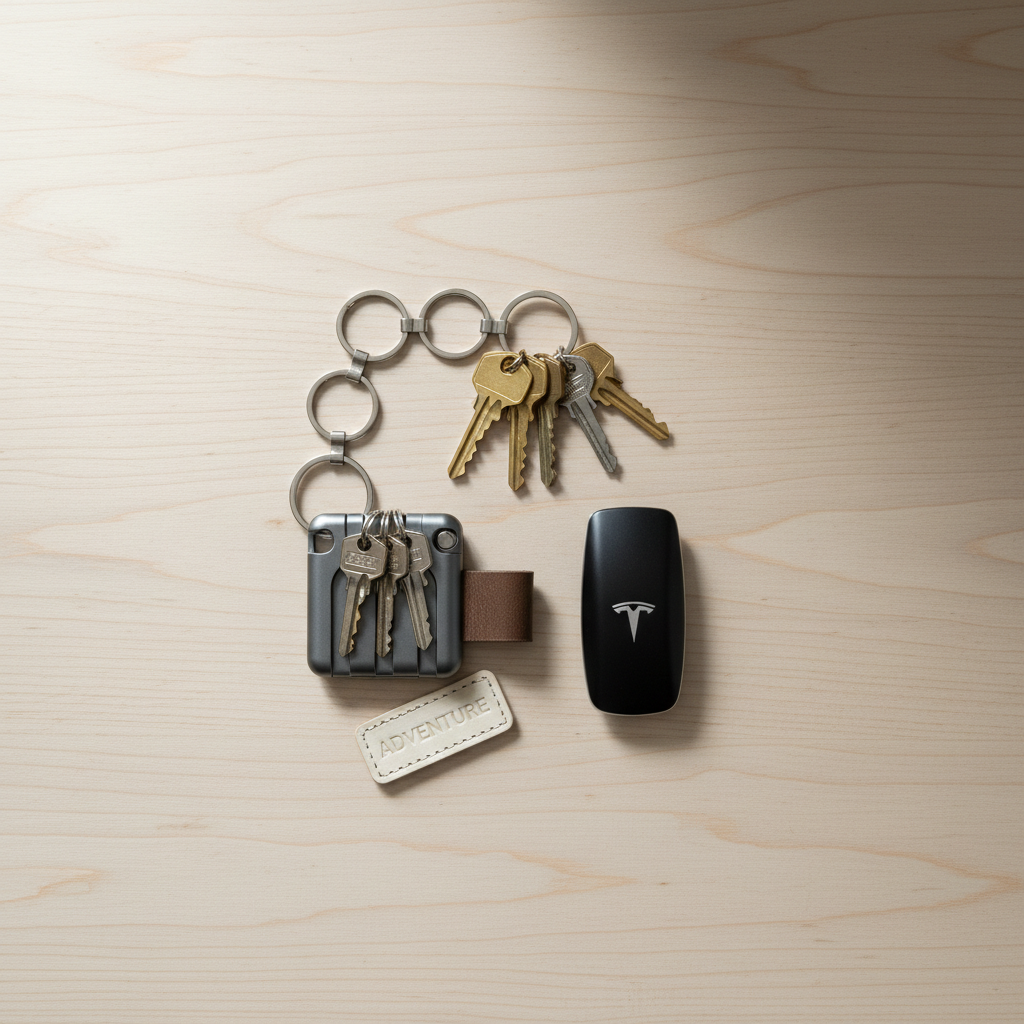
Why keys get messy (and why “one big ring” keeps failing)
If your keys feel chaotic, it’s rarely because you’re disorganized as a person, it’s because your keychain has no clear rules. A few common patterns show up again and again.
- Everything lives on one ring, so daily keys fight for space with “just in case” keys.
- You keep retired keys, old apartment keys, expired padlock keys, office keys you no longer use, they quietly add bulk.
- You have mismatched formats, a car fob, key cards, tiny mail keys, bulky store loyalty fobs, they don’t stack well.
- You add keys but never redesign, the setup grows like a junk drawer.
There’s also a safety angle. A heavy keyring can pull on the ignition or bounce around; modern cars are different, but it’s still smart to keep weight reasonable. According to AAA, a lighter keyring can help reduce wear on ignition components in many common driving scenarios.
Quick self-check: what kind of key problem do you actually have?
Before buying a new organizer, do a fast diagnosis. This saves money and avoids “fixing” the wrong issue.
Pick the statements that sound like you
- I can’t find the right key fast (access problem).
- My pocket feels bulky (carry problem).
- My keys scratch my phone or other items (damage problem).
- My keys jingle loudly (noise problem).
- I lose keys or forget them (tracking/habit problem).
Match the problem to the likely fix
| What annoys you most | What usually helps | What to avoid |
|---|---|---|
| Hard to grab the right key | Two-ring system + “daily ring” | Overstuffed single split ring |
| Too bulky in pocket | Key organizer (stacked) or slim carabiner | Large novelty fobs |
| Scratches phone/wallet | Organizer + separate pocket, or leather sleeve | Loose metal keys next to screens |
| Noisy jangling | Stacked organizer or tight mini-rings | Extra rings and loose spacers |
| Misplace keys often | Consistent drop zone + tracker | Changing where you put keys daily |
Choose a keychain style that matches your routine
How to organize keys with keychain gets easier once you stop treating all keychains as interchangeable. Different styles solve different problems, and plenty of people get stuck because they picked a cool-looking option that fights their daily habits.
Common options (and who they suit)
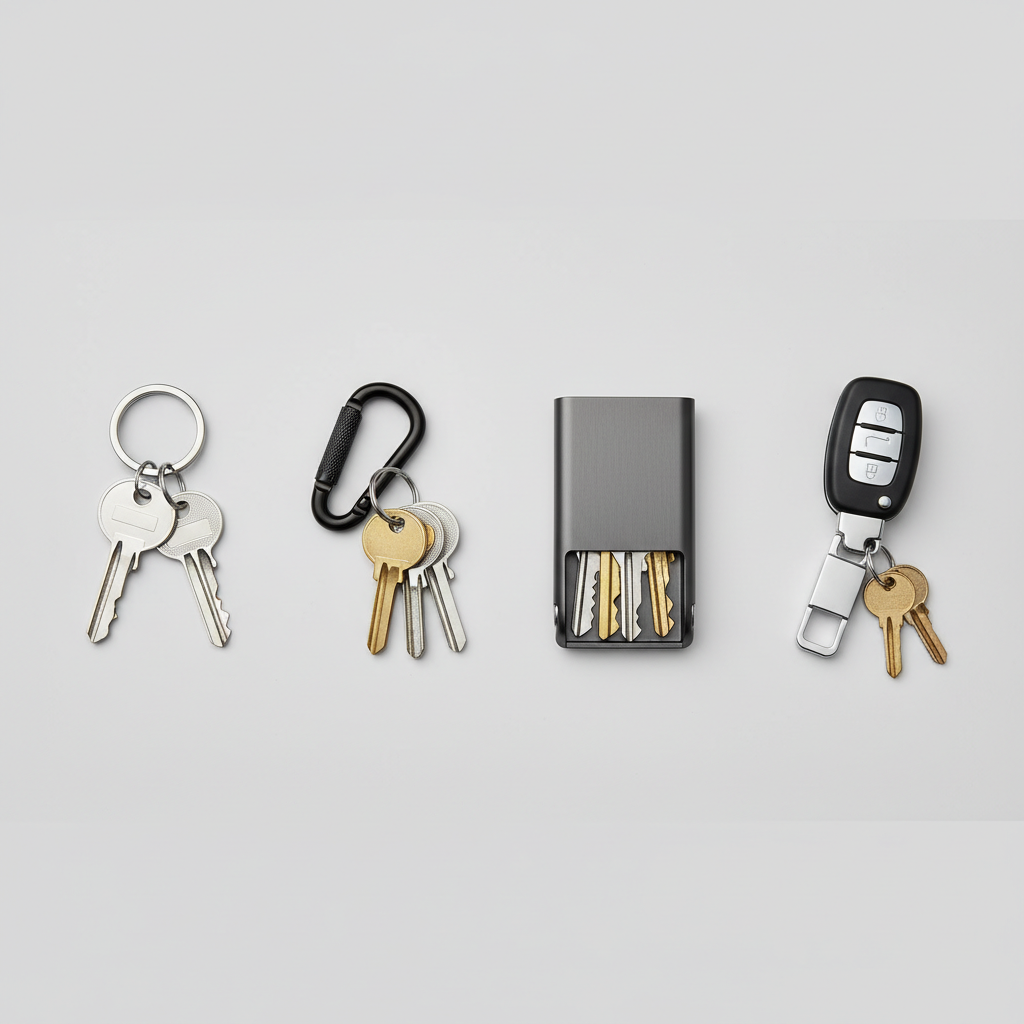
- Split ring (classic): cheap and flexible, best if you carry few keys and don’t mind noise.
- Carabiner clip: great for quick on/off, good for belt loop or bag carry, less ideal for tight pockets.
- Key organizer (stacked “Swiss-army” style): reduces bulk and jingling, best for 3–8 flat keys, sometimes awkward for thick keys.
- Quick-release connector: helpful if you separate car key from house keys often, nice for valet or gym.
- Lanyard: common for building access, best for people who need keys visible, not great if you hate neck clutter.
Key point: if you carry a car fob, most “perfect” setups still look a little asymmetrical, and that’s fine. The goal is access and comfort, not aesthetics.
Step-by-step: a practical method to organize your keys
If you want something that works for most households, this is the simplest structure: separate by frequency, then build around your “daily keys.”
Step 1: Empty everything and sort into three piles
- Daily: home key, car key/fob, mailbox key, anything you touch most days.
- Weekly/occasional: office key, gym locker key, shed key, family member’s spare.
- Rare/emergency: storage unit, old padlock backups, keys you keep “just in case.”
Be honest here. If a key hasn’t moved in six months, it usually doesn’t belong on your everyday carry.
Step 2: Make a “daily ring” and cap it
Your daily set should feel intentionally small. Many people land around 3–6 keys plus a fob, but it varies. What matters: your hand finds the right key without a shuffle.
Step 3: Add one secondary attachment, not five
Instead of one huge ring, use a secondary mini-ring, quick-release, or small carabiner for occasional keys. This keeps the core set stable while still letting you carry extras when you need them.
Step 4: Label the “mystery keys” immediately
If you’re not 100% sure what a key opens, don’t guess later. Add a small tag or temporary label tape, then test it when you have a minute.
Step 5: Place the fob thoughtfully
Car fobs are bulky and often the loudest piece. Many people prefer keeping the fob on a quick-release so the rest of the keys can stay compact, especially if you hand the car key to someone else.
3 setups that work in real life (pick one and copy it)
You don’t need a custom system, you need a repeatable one. Here are three setups that tend to fit common U.S. routines.
Setup A: Minimal pocket carry (quiet and slim)
- Stacked key organizer for house/mail keys
- Quick-release to detach car fob
- Optional: small tracker if you misplace keys often
Best if your main complaint is bulk, noise, or scratching other items.
Setup B: Clip-and-go (for bags, belt loops, and quick access)
- Small locking carabiner
- Daily ring + one mini-ring for occasional keys
- Short strap or paracord loop for grip
Best if you hate digging in pockets or you carry keys with a backpack, work bag, or tool bag.
Setup C: Home-base system (if you only need a few keys out)
- Daily ring kept light
- Rare keys stored on a labeled spare ring at home
- Spare copies stored separately for emergencies
This is the setup that quietly fixes most “my keychain is ridiculous” situations, because it stops daily carry from becoming long-term storage.
Small upgrades that make the system stick
Once the structure works, a few small choices can keep it from sliding back into chaos.
- Use tighter hardware: small split rings or screw-lock connectors reduce accidental loss compared with loose rings.
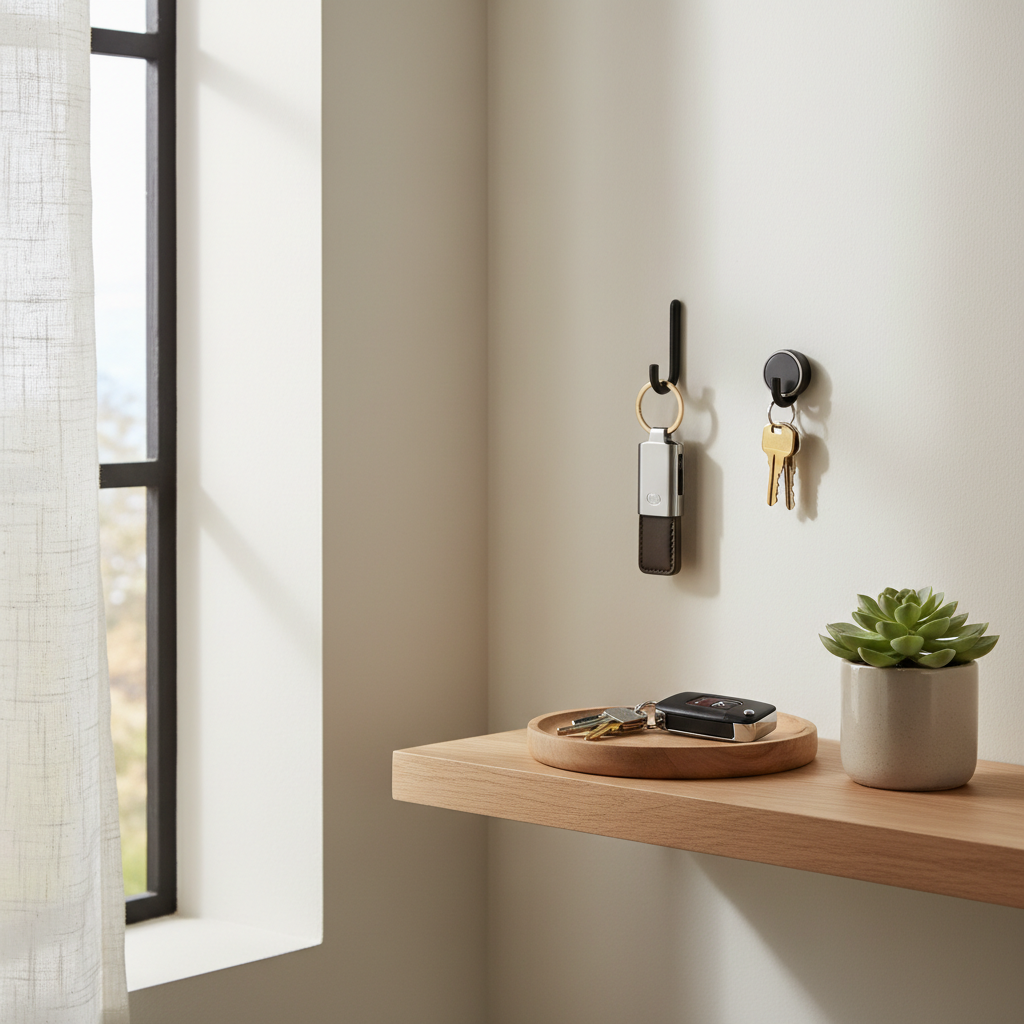
- Pick one “drop zone”: tray, hook, or bowl near the door, the habit matters more than the product.
- Consider a tracker: if you regularly misplace keys, a Bluetooth tracker can help. According to Apple, AirTag supports Precision Finding on supported iPhone models, which can make locating nearby items easier in many situations.
- Protect what keys touch: if keys share a pocket with a phone, a slim organizer or sleeve reduces scratching.
Key takeaway: adding one helpful accessory is fine, adding three “because they might be useful” usually recreates the original problem.
Common mistakes (the stuff that wastes time and money)
Some key setups fail for predictable reasons, and it’s not always obvious until you’ve already bought new clips and rings.
- Keeping duplicates on the same keychain: a spare belongs somewhere safe, not in your daily pocket.
- Over-optimizing for looks: polished brass and big charms can be fun, but comfort wins on day 30.
- Using weak connectors: cheap split rings can flex open, especially if you clip and unclip often.
- Making the “rare key” too hard to access: if you need it monthly, it’s not rare, you’ll end up reattaching it permanently.
When you should get professional help (yes, sometimes you should)
If a key is for a secure building, a restricted keyway, or a modern car fob, copying or modifying your setup can be tricky. According to ALOA Security Professionals Association, certain keys and lock systems may require authorized duplication or specific procedures.
- If you lost a key that could identify your address, consider talking to a locksmith about rekeying.
- If your car key or fob acts up after you change your keychain, a dealership or automotive locksmith can help, avoid DIY fixes that may worsen the issue.
- If you carry workplace keys with strict policies, follow your employer’s rules before reorganizing.
Conclusion: a keychain system you can live with
How to organize keys with keychain isn’t about buying the fanciest organizer, it’s about making daily keys small, obvious, and easy to separate from occasional clutter. If you do nothing else, build a daily ring, move rare keys off your body, and commit to one drop zone at home.
Pick one setup from above and run it for a week, then adjust one thing, not everything. That’s how key organization turns into a habit instead of a weekend project.