
men belt leather styles can either quietly polish an outfit or loudly throw it off, and most guys only notice the difference after a photo or a meeting goes sideways. The tricky part is that belts feel “basic,” so it’s easy to buy one decent black belt and assume it covers everything.
But belts sit at the center line of your outfit, they connect shoes to the rest of your look, and they’re one of the first accessories people register even if they can’t name why. When the leather finish, buckle vibe, and width match the occasion, you look more put-together without trying.
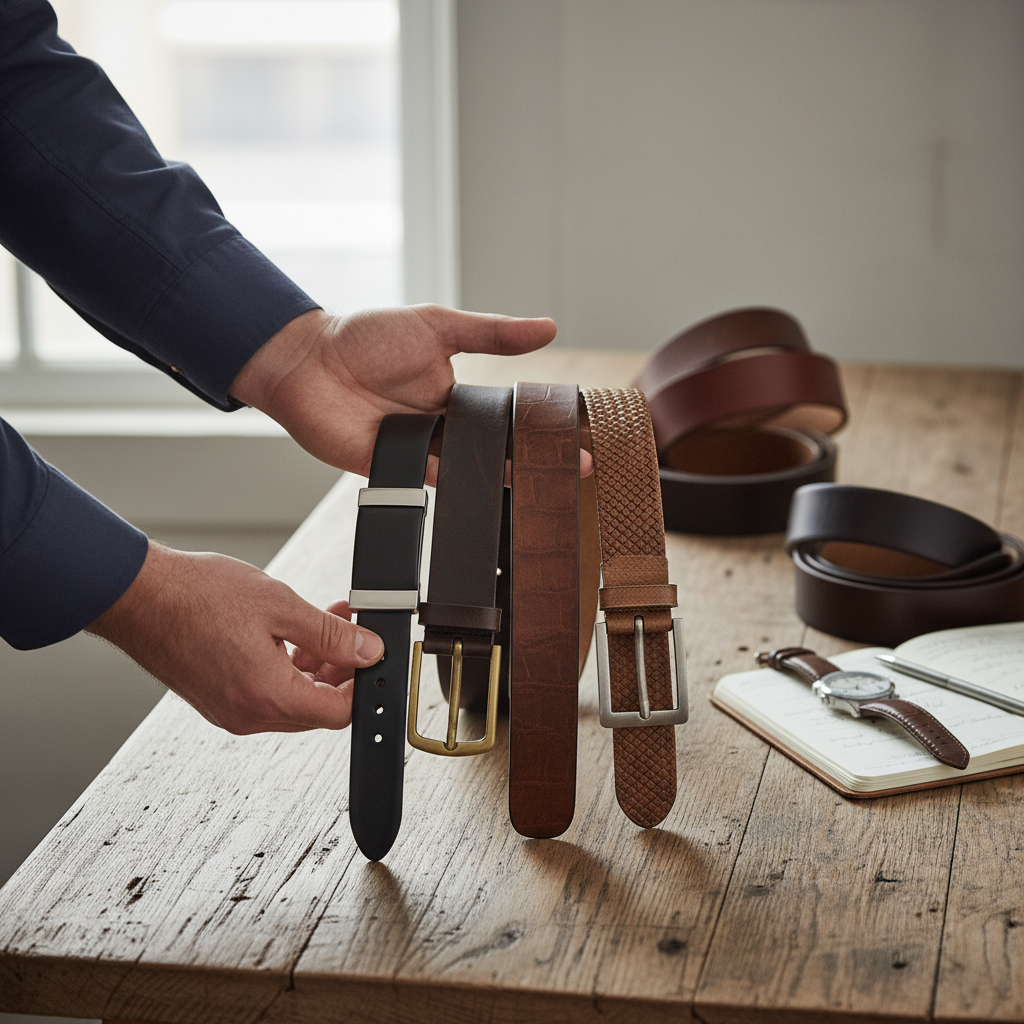
This guide breaks down the belt styles that actually show up in real wardrobes: what to wear with suits, jeans, chinos, and boots, how to choose the right buckle, and how to avoid the common “nice belt, wrong belt” problem. You’ll also get a quick self-check and a simple buying plan if you want fewer belts that do more work.
What changes between men’s leather belt styles (and why it matters)
Most style advice gets stuck on color, but in practice the biggest differences come from width, leather finish, and buckle design. Those three details decide whether a belt reads “dress,” “casual,” or “workwear.”
- Width: Dress belts often sit around 1 to 1.25 inches, casual belts commonly run 1.5 inches. Wider usually looks too heavy with tailoring.
- Leather finish: Smooth, tighter-grain leather tends to look dressier; pebbled, distressed, or pull-up leather leans casual.
- Buckle vibe: Slim, simple buckles dress up; chunky or roller buckles feel rugged; big plaques can dominate the outfit.
- Tip shape and edges: A clean, squared tip and subtle edge paint signals “office”; contrast stitching or heavy edge paint signals “weekend.”
Many guys buy a belt that’s “nice” in isolation, then wonder why it fights their suit or looks timid with denim. Usually it’s one of those three elements, not the brand name.
Dress outfits: belts for suits, business casual, and weddings
If your outfit includes a suit, sport coat, or dress shoes, you want a belt that stays in the background. That’s where classic men belt leather styles do their best work: smooth leather, narrower width, and a restrained buckle.
Quick rules that keep you out of trouble
- Match belt color to shoe color as closely as you can (black with black shoes, brown with brown shoes). Similar tone matters more than “same brand.”
- Match metal finishes when it’s easy: silver buckle with a silver watch case, gold buckle with warmer metals. If you mix, keep it subtle.
- Keep the buckle simple (frame buckle, low profile). Avoid oversized buckles with tailoring.
For formal events, a black smooth leather belt with a simple silver buckle is the safest pick. For business casual, a medium-brown smooth belt often plays nicely with chinos and a blazer, especially when your shoes are brown or oxblood.
According to GQ... matching your belt to your shoes remains a reliable baseline for smarter outfits, especially in professional settings where small mismatches stand out more than you expect.
Casual outfits: jeans, chinos, and everyday sneakers
Casual looks give you more freedom, but they also make it easier to overdo contrast. With denim and tees, men belt leather styles can add texture and structure so the outfit doesn’t feel unfinished.
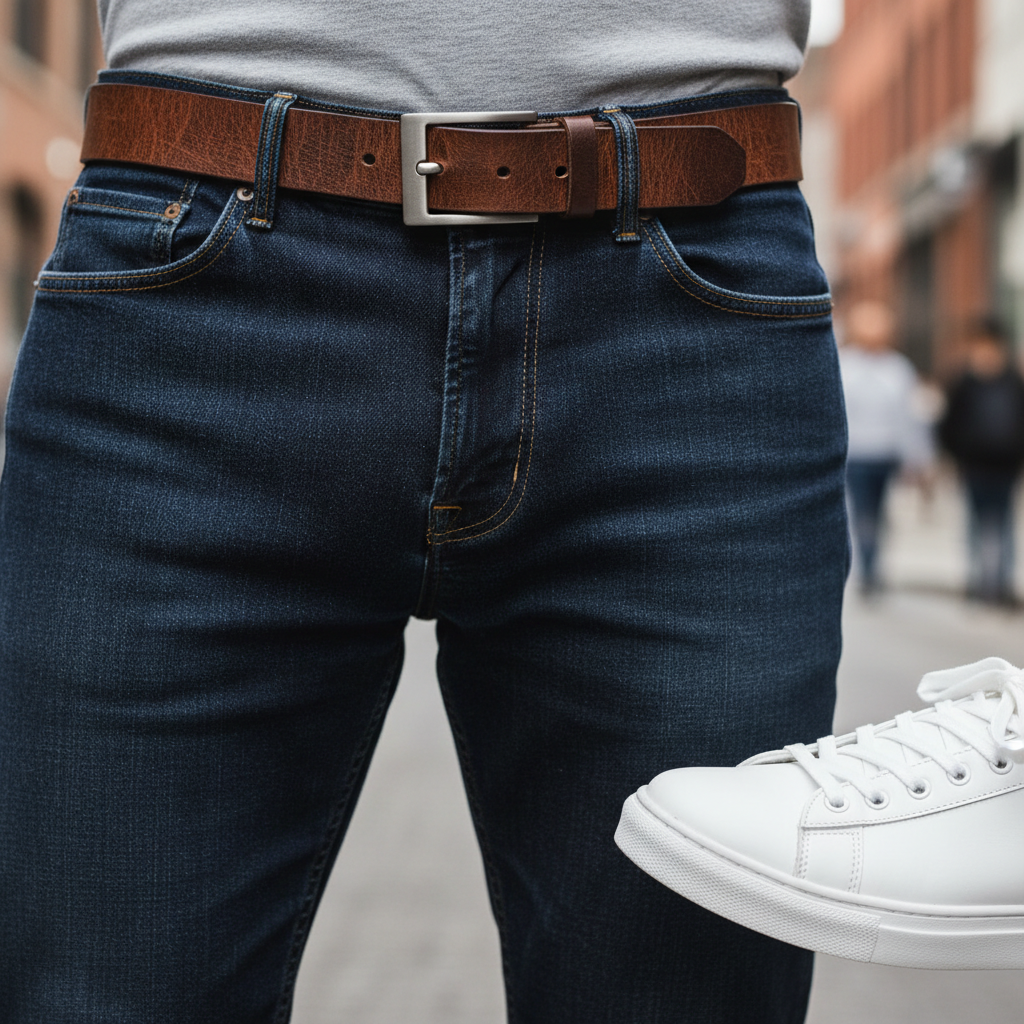
Here’s what tends to work in real closets:
- Textured leather belts (pebbled, lightly distressed) pair well with denim and flannels.
- 1.5-inch casual belts look balanced with jeans and sturdier footwear.
- Matte or brushed buckles feel more relaxed than shiny polished hardware.
If you wear a lot of chinos and minimal sneakers, a medium-width belt with a clean buckle can bridge casual and smart-casual. It’s the belt you grab when you don’t want to think too hard.
Workwear and boots: rugged belts that don’t look costume-y
Boot outfits can handle heavier leather, bigger buckles, and more visible stitching, but there’s a line where it starts to look like you’re dressed for a job site you’re not going to. The goal is “durable,” not “themed.”
- Thicker leather and a sturdier buckle make sense with boots and heavyweight denim.
- Roller buckles (the little rolling bar) are practical and naturally look more rugged.
- Dark brown is often easier than black for boot-focused outfits because it blends with patina and earth tones.
A quick sanity check: if the buckle becomes the loudest thing on your body, it’s probably doing too much for everyday wear.
Pick the right belt fast: a self-check list
If you’re standing in front of a mirror with a belt in hand, this quick check usually tells you whether it fits the outfit.
- What’s the dress level? Suit or dress shirt means smoother leather and a smaller buckle.
- What’s on your feet? Shoes decide more than your shirt does, match the belt to the footwear first.
- Is the belt wider than your belt loops? If it fights the loops, it looks off and feels worse.
- Is the leather finish fighting your shoes? Super shiny belt with matte suede shoes often looks mismatched.
- Does the buckle match your vibe? Minimal outfit plus huge buckle rarely feels intentional.
When you’re building a small rotation, men belt leather styles that stay close to “classic” tend to get worn more, because they don’t demand a specific outfit.
A practical starter set: 3 belts that cover most outfits
If you’d rather stop guessing, a small belt lineup usually beats a drawer full of random picks. For many guys in the U.S., these three cover office, weekends, and boots with minimal overlap.
| Use case | Recommended style | Best colors | What to avoid |
|---|---|---|---|
| Suit, wedding, interviews | Smooth dress belt, slim buckle, 1–1.25 in | Black (primary), dark brown (secondary) | Wide straps, chunky buckles, heavy texture |
| Smart casual, chinos, polos | Mid-width leather belt, clean frame buckle | Medium brown, tan | High-gloss finish, loud hardware |
| Jeans, boots, workwear | Thicker casual belt, matte/roller buckle | Dark brown, tobacco | Oversized plaque buckles for daily wear |
If you already own a black dress belt, your “most useful next belt” is often a medium-brown option with a slightly casual finish. It opens up a lot of outfits without looking like you bought a costume accessory.
Fit and sizing: the part that ruins even a good belt
The best-looking belt still fails if it fits poorly, and this is where online shopping gets annoying. In many cases, your belt size is 1–2 inches larger than your pant waist size, but sizing varies by brand, so it’s smarter to use their chart and measure a belt you already like.
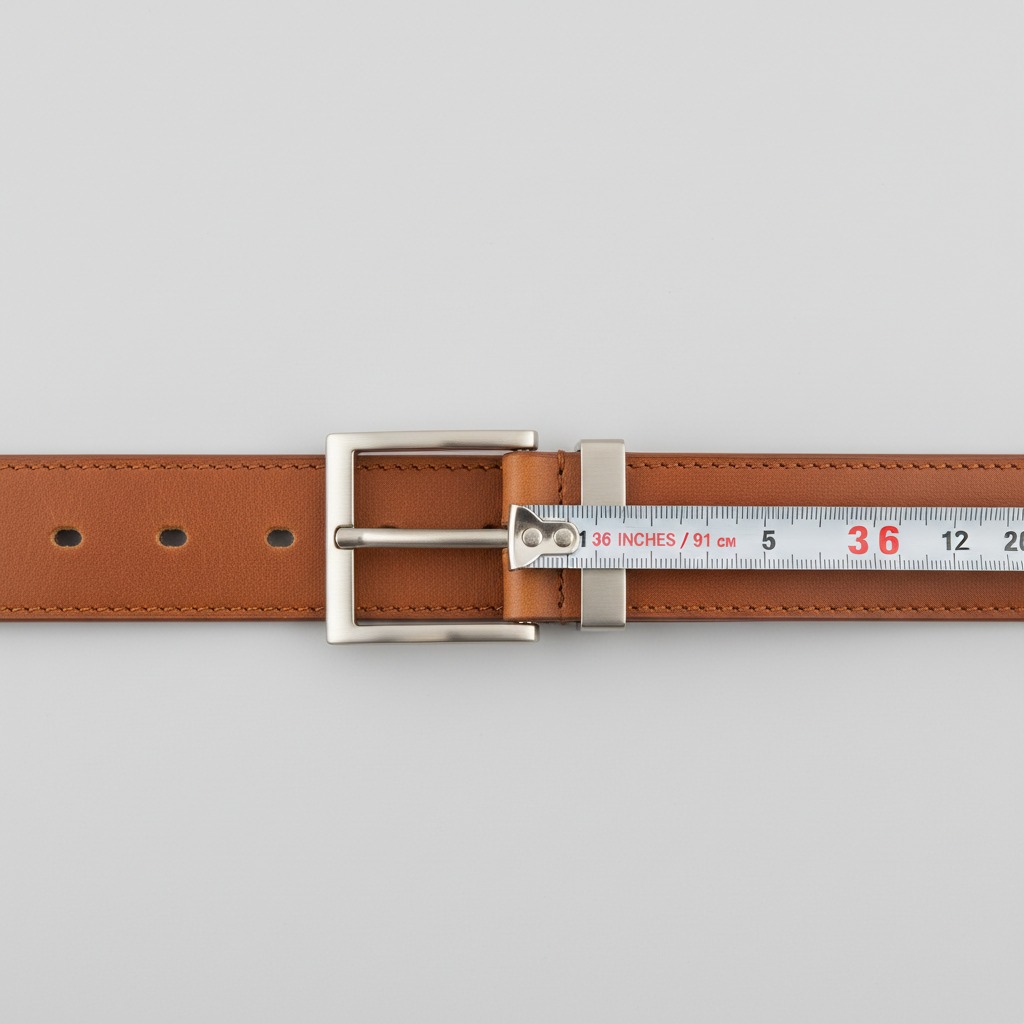
What you want: the belt to buckle on the middle hole, so you have room to tighten or loosen. If you always use the last hole, the tail gets too long, and the belt looks like it’s borrowed.
Two quick sizing tips that save hassle
- Measure an existing belt: from the buckle pin to the hole you use most, then buy the closest size.
- Mind the tail length: a modest tail that reaches the first belt loop is usually cleaner than a long flap.
Also, avoid punching extra holes as a first move if the belt is pricey, a cobbler can often add holes cleanly and keep the finish neat.
Common mistakes (and what to do instead)
- One belt for everything: if it’s wide and textured, it will fight suits; if it’s slim and shiny, it can look underpowered with jeans. Keep at least two lanes: dress and casual.
- Ignoring shoe material: suede shoes plus super glossy belt often feels mismatched. Aim for similar “shine level.”
- Overbranding: big logos can dominate an otherwise timeless outfit. If you love it, fine, but recognize it becomes the focal point.
- Wrong buckle finish: a bright, mirror-polished buckle can look sharp with formalwear, but on a relaxed outfit it sometimes reads “trying hard.”
According to Esquire... keeping accessories understated is a dependable way to make outfits look intentional, especially when you’re mixing dress and casual pieces.
Key takeaways you can use today
- Start with shoes, then choose belt color and finish that feel consistent with them.
- Dress belts stay slim and smooth, casual belts can go wider and more textured.
- Buckle size signals formality, small and simple reads smarter in most settings.
- Buy fewer, better-matched belts rather than collecting “almost right” options.
If you want an easy next step, pull your two most-worn pairs of shoes, then choose one belt that matches each pair’s color and vibe. That alone fixes most outfit friction without a closet overhaul.
FAQ
What men belt leather styles work best with a navy suit?
A smooth leather dress belt with a simple buckle usually fits best. Most guys choose dark brown or black depending on shoe color, and keeping the buckle low-profile prevents it from competing with the suit.
Is it okay if my belt and shoes aren’t the exact same shade?
Yes, in many real outfits the goal is “close enough” in tone and formality. A medium-brown belt with slightly darker brown shoes often looks intentional, but mixing black belt with brown shoes tends to look like an accident.
Can I wear a dress belt with jeans?
You can, especially with dark, clean denim and a smarter top, but it can look a bit polished if the belt is very shiny and narrow. If you wear jeans often, a casual leather option usually looks more natural.
What belt width should I choose for everyday wear?
For most jeans and casual pants, around 1.5 inches is a common sweet spot. For tailored trousers or dressier outfits, narrower widths generally look cleaner.
How do I know if a buckle is too big?
If the buckle becomes the first thing you notice in the mirror, it’s probably too dominant for daily outfits. With dress clothes, that threshold is even lower, subtle buckles tend to age better.
Should I match my belt to my watch strap?
It helps when the watch has a leather strap, but it’s not mandatory. Many people wear metal bracelets, in that case matching the buckle tone to the watch case is a simple, quiet upgrade.
How many belts does a man really need?
Most wardrobes work well with two to three: one dress belt, one casual belt, and optionally a rugged belt for boots. More than that is personal preference, or tied to specific dress codes.
If you’re building a small wardrobe and want men belt leather styles that work across office, weekends, and events without endless trial and error, it can help to map belts to your top shoes first, then fill the gaps with one versatile brown and one reliable black.