
men office outfit smart usually comes down to three things you can control fast: fit, fabric, and how intentional the pieces look together. If you’ve ever felt “almost dressed right” but still underdressed in meetings or overdressed on casual days, you’re not alone.
The tricky part is that offices in the U.S. don’t share one dress code anymore, even inside the same company. Your calendar also changes the rules, a client call at 2 pm is different from a quiet Friday morning.

This guide gives you practical outfit formulas, a quick self-check so you match your workplace, and a few “small upgrades” that make smart outfits look effortless instead of try-hard.
What “smart office” really means in the U.S.
“Smart” sits between business formal and weekend casual: polished, office-appropriate, and a little structured. Think collars, real shoes, clean lines, and fabrics that hold their shape.
According to SHRM (Society for Human Resource Management), many organizations set dress expectations based on safety, professionalism, and the company image, which is why you’ll see different norms by industry and role.
- Smart casual office: chinos or dark jeans, button-down or polo, leather sneakers or loafers.
- Business casual: chinos or wool trousers, OCBD or knit shirt, optional blazer, leather shoes.
- “Client-facing smart”: blazer or sport coat becomes the default, darker colors, sharper shoes.
Why smart outfits fail (even with good clothes)
Most misses aren’t about taste, they’re about a few common friction points that make an outfit look accidental.
- Fit drift: shoulders too wide, sleeves too long, pants pooling at the shoe. One alteration often beats buying “better” brands.
- Too many casual signals: wrinkled tee, athletic sneakers, loud logo belt, then you add a blazer and it still reads confused.
- Wrong fabric for the day: shiny suit wool in a casual office, or thin cotton pants that wrinkle by 10 am.
- Color chaos: everything “nice” but nothing coordinated, especially when browns and blacks fight each other.
- Shoe mismatch: shoes are the loudest signal. A smart outfit with beat-up soles loses instantly.
Quick self-check: what level of smart do you need?
If you want a men office outfit smart plan that actually fits your reality, answer these quickly. Your goal is “slightly sharper than the room,” not costume.
- Who do you see today? Internal team only, leadership, or external clients.
- What’s your industry? Finance/law tends to skew sharper, tech and creative often relax rules.
- Do you present or lead meetings? If yes, add one structured piece (blazer or knit jacket).
- How hot/cold is your commute? If you sweat outside, choose breathable layers and keep a backup shirt at work.
- What’s “normal” footwear there? If everyone wears sneakers, you can still go smart with clean leather pairs.
Smart office outfit formulas you can reuse
These are mix-and-match templates that look intentional without taking time. Pick one and repeat with different colors.
Formula 1: Blazer + OCBD + chinos
- Navy blazer
- Light blue or white oxford cloth button-down
- Stone, tan, or olive chinos
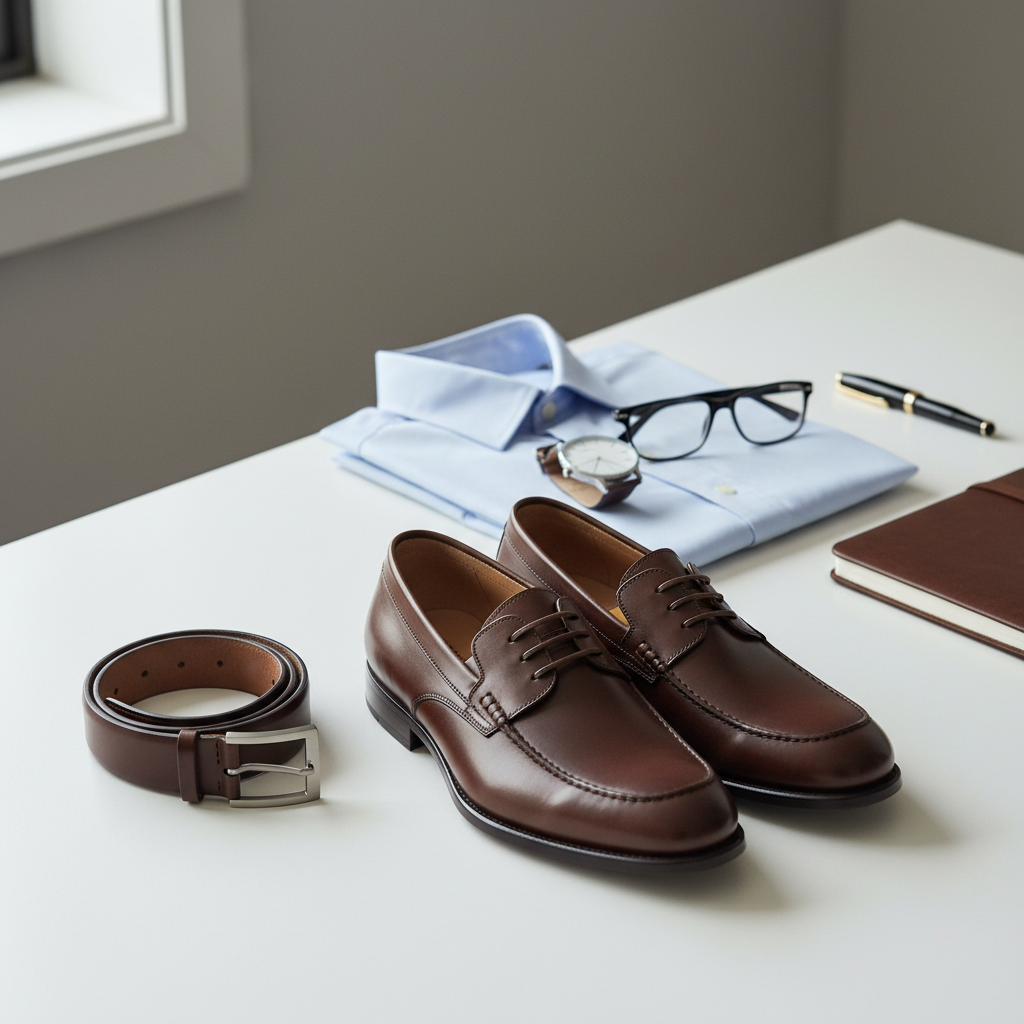
- Brown loafers or derbies, matching belt
This is the safest “promotion-ready” look while still comfortable.
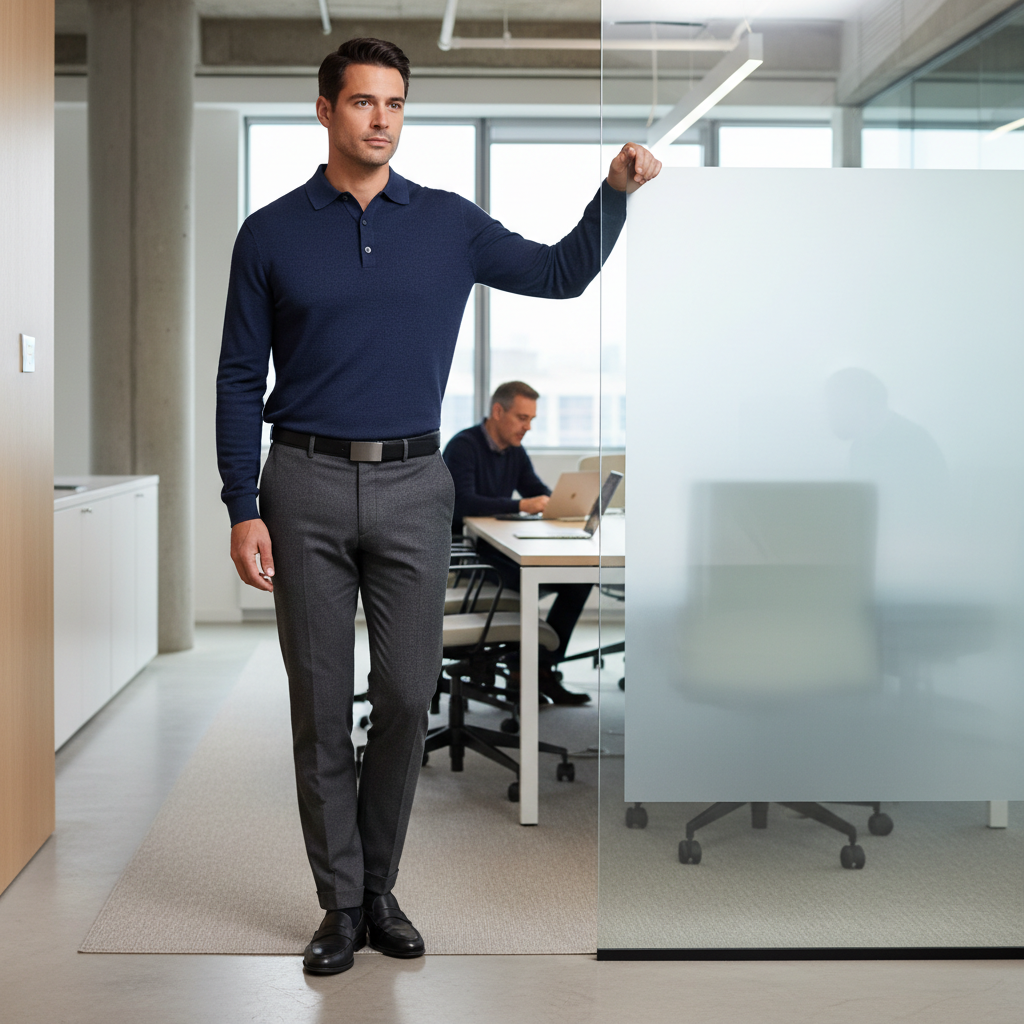
Formula 2: Knit polo + wool trousers
- Fine-gauge knit polo (navy, cream, charcoal)
- Mid-grey wool trousers or tailored tech trousers
- Loafers or sleek leather sneakers
Looks modern and clean, especially in warmer months.
Formula 3: Dress shirt + cardigan or overshirt
- White or pale striped dress shirt
- Merino cardigan or structured overshirt in navy/charcoal
- Dark chinos or trousers
- Derbies or Chelsea boots
Great for offices that blast AC, and it reads smarter than a hoodie without being stiff.
Formula 4: Dark denim (if allowed) + sport coat
- Dark, clean denim with no distressing
- Textured sport coat (hopsack, tweed-lite, or cotton-linen blend)
- Simple shirt: OCBD or fine tee under a clean jacket
- Boots or loafers
Use this when you want “creative-smart” rather than “bank-smart.”
A simple shopping table: build a small smart wardrobe
If you’re rebuilding, you don’t need 20 items. You need the right 10 that work together. Here’s a practical starter set.
| Category | Best starter colors | What to look for | Works for |
|---|---|---|---|
| Blazer / sport coat | Navy, charcoal | Soft shoulder, minimal shine, easy layering | Meetings, presentations, client calls |
| Shirts | White, light blue | Collar that holds shape, not too slim | Daily rotation |
| Chinos | Stone, tan, olive | Mid-rise, clean taper, minimal wrinkling | Business casual offices |
| Trousers | Mid-grey, navy | Drape, comfortable waistband, hem length right | Sharpening any outfit |
| Shoes | Brown, oxblood | Simple silhouette, good sole condition | Instant “smart” upgrade |
Practical upgrades that make you look sharper fast
These are small moves that change the whole impression, especially if your office leans casual.
- Hem your pants: a clean break (or slight break) reads tailored and modern.
- Choose one “structure” item: blazer, overshirt, or cardigan. One is enough.
- Make shoes non-negotiable: wipe them, condition them, replace worn laces.
- Keep a consistent leather tone: brown belt with brown shoes, black with black, unless you know you’re mixing on purpose.
- Use texture, not loud patterns: subtle knit, twill, flannel, or hopsack looks expensive without shouting.
Also, a quiet point people ignore: if your shirt collar collapses and your cuffs fray, it doesn’t matter how nice your jacket is.
Common mistakes to avoid (so you don’t look “overdressed”)
A men office outfit smart look can go wrong when you push formality without matching context.
- Full suit in a casual office: it can read like you’re interviewing every day. Try separates instead.
- Super skinny silhouettes: trendy fits can look dated fast, and they’re less forgiving in motion.
- Ultra-shiny fabrics: shiny usually reads cheap under office lighting.
- Too many statement pieces at once: bold tie + bold socks + loud jacket, pick one focal point.
- Ignoring comfort: if you tug at your shirt all day, your confidence drops, and people notice.
When it’s worth getting professional help
If you keep buying clothes but still feel “off,” it’s often a fit or proportion issue, not a style issue. In many cases, a tailor or an in-store stylist can save you money by making fewer pieces work harder.
- Consider a tailor if sleeves cover your hands, shirts balloon at the waist, or pants stack at the ankle.
- Consider a stylist if your office culture is unclear and you’re client-facing, or you’re rebuilding after a role change.
- If you have skin sensitivities to wool or certain dyes, you may want to consult a medical professional for personalized guidance.
Key takeaways for a smarter work wardrobe
- Fit beats brand, and small alterations usually create the biggest jump in polish.
- One structured layer (blazer, overshirt, cardigan) makes outfits look intentional.
- Shoes and grooming are the quickest credibility signals in most offices.
- Repeatable formulas reduce morning decisions and keep your look consistent.
Pick one formula from above, build it in two colorways, and wear it for two weeks. That small test tells you what your office responds to, and what you actually enjoy wearing.
FAQ
What counts as a smart office outfit for men?
Usually it’s a collared top, clean tailored pants, and real shoes, with at least one piece that adds structure. It should look deliberate, not like gym-to-desk.
Can I wear sneakers with a men office outfit smart look?
In many workplaces, yes, if they’re clean, minimal, and leather or leather-like. Athletic running shoes tend to pull the outfit casual fast.
Are jeans acceptable for smart office style?
Sometimes. Dark, non-distressed denim can work if your office already allows jeans, especially with a sport coat or a sharp overshirt.
What colors look most professional without feeling stiff?
Navy, charcoal, white, light blue, and mid-grey rarely cause problems. Add interest with texture (knit, twill) instead of loud patterns.
How do I avoid looking overdressed in a casual office?
Skip the matching suit, keep the tie optional, and choose softer pieces like an unstructured blazer, knit polo, or chinos with a clean taper.
What’s the fastest upgrade if my closet is basic?
Better shoes and a proper hem on your pants. Those two changes often make the same shirt-and-pants combo look noticeably sharper.
How many outfits do I need for a typical week?
For most people, 3–4 core bottoms and 5–7 tops cover a workweek with variety, especially if you rotate outer layers like a blazer or cardigan.
Conclusion
A smart office wardrobe isn’t about dressing like someone else at a different company, it’s about looking credible in your room while staying comfortable enough to do your job well. Start with one reliable men office outfit smart formula, tighten fit and shoes, then expand slowly with pieces you’ll actually repeat.
If you want a more hands-off approach, build a short list of “uniform” items you love, then buy duplicates in neighboring colors, it’s the simplest way to stay consistent without thinking about it every morning.