
Nurse outfit scrubs fashion doesn’t have to mean loud prints or breaking dress code, it usually comes down to fit, fabric, and a few smart styling choices that still feel professional at 7 a.m.
If you’ve ever tried on a “cute” set that looked great online but felt stiff, sheer, or oddly baggy under hospital lighting, you’re not alone. Scrubs live in a real-world space: bending, lifting, charting, and sprinting for alarms, your outfit has to work before it looks good.

This guide focuses on what actually moves the needle for looking polished: choosing silhouettes that flatter without restricting, building a small mix-and-match palette, and handling the “unsexy” constraints like pockets, infection control, and employer policies.
Key takeaway: when scrubs fit well at the shoulders, waist, and inseam, almost any color or brand reads more put-together.
What “stylish” means in scrubs (and what it doesn’t)
In most healthcare settings, style is less about trends and more about looking clean, consistent, and intentional. That’s what patients and coworkers notice first.
- Style that works: tailored-but-not-tight fit, cohesive colors, minimal bulk, clean shoes, tidy hair.
- Style that backfires: see-through fabric, dragging hems, excessive accessories, strong fragrance, or anything that complicates hand hygiene.
According to CDC guidance on infection prevention in healthcare environments, clothing and PPE choices should support hygiene and reduce contamination risk, which is why many facilities limit certain outer layers, jewelry, or long sleeves in clinical areas.
Why your scrubs can look “off” even when they’re new
A lot of nurse outfit scrubs fashion frustration comes from small fit issues that add up. The good news, these are fixable without a whole new wardrobe.
- Shoulders too wide or too narrow: creates a boxy shape or pulls across the back when you reach.
- Rise and waistband mismatch: waistband hits the wrong spot, so tops ride up or pants slide down.
- Wrong inseam: puddling fabric looks sloppy and can be a safety issue; too short can look like shrinkage.
- Fabric that collapses: thin poly blends can cling in odd places or wrinkle fast, especially after long shifts.
- Color issues: “cute” shades can read neon under fluorescent lighting or emphasize stains and lint.
Quick self-check: what’s holding your look back?
If you want the fastest upgrade, diagnose the biggest friction point before you buy more sets.
Fit check (takes 2 minutes)
- When you lift your arms, does the top pull across the upper back?
- Do you have to tug your waistband more than once per hour?
- Are pant hems touching the floor without shoes?
- Do pockets gape or flare when you load them?
Function check (what your shift demands)
- High-mobility units: look for stretch and gussets, avoid stiff woven fabric.
- Hot environments: prioritize breathable blends and vented panels where allowed.
- Lots of supplies: cargo pockets can look bulky, but a slimmer cargo cut often keeps the silhouette cleaner.
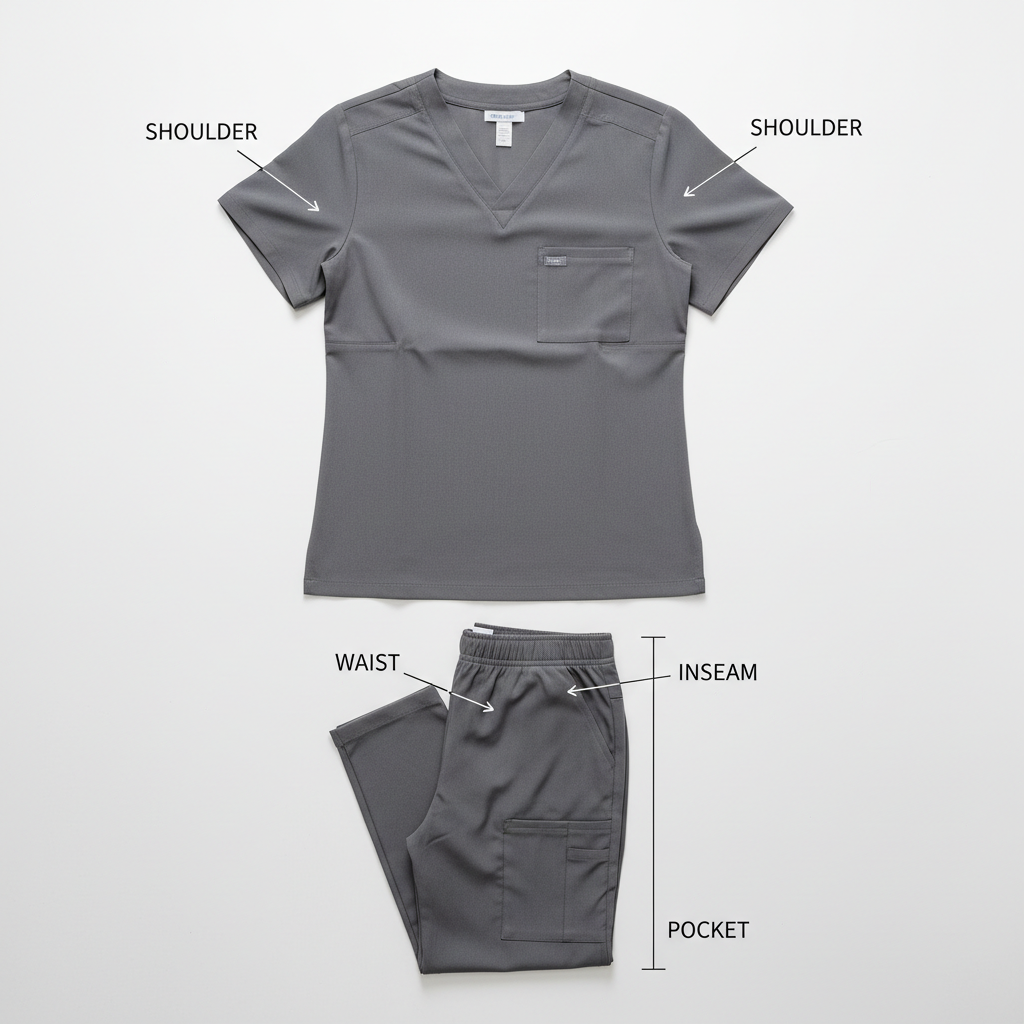
If you answered “yes” to more than two fit questions, upgrading the cut will typically matter more than switching colors or buying trendier prints.
Build a stylish scrub wardrobe with fewer pieces
The easiest way to look consistently good is to reduce “randomness.” A small capsule beats ten mismatched sets, especially when you’re dressing fast.
Pick a color strategy that matches your workplace
- Facility-issued colors: lean into tone-on-tone, like navy top with slightly different navy pants for dimension.
- Open color policy: choose 2-3 core colors plus 1 accent (for a jacket, underscrub, or headband).
- Prints: one print top with solid bottoms usually reads more polished than print-on-print.
Use this simple capsule formula
- 3 solid tops + 2 matching bottoms (or 3 bottoms if you do back-to-back shifts)
- 1 warmer layer that fits your dress code (zip jacket or scrub jacket)
- 1 pair of “inside only” work shoes + optional backup pair
Scrub fit and fabric choices that look good and survive shifts
When people ask what brand is “most fashionable,” the honest answer is: the one that fits your body and your unit’s realities. Still, there are a few specs worth shopping by.
| What to look for | Why it matters | Best for |
|---|---|---|
| 2-way or 4-way stretch | Easier reaching, less pulling at seams | Busy floors, frequent movement |
| Midweight fabric (not see-through) | Hangs better, looks “new” longer | Light colors, long shifts |
| Structured seams (princess seams, darts) | Adds shape without tightness | Anyone who feels boxy in unisex cuts |
| Jogger or tapered leg (done right) | Cleaner line, less fabric dragging | Shorter inseams, lots of walking |
| Functional pockets with low bulk | Less ballooning at hips/thighs | People who carry gear but want a neat silhouette |
One practical tip: if you love a pair of pants but the hem length is wrong, hemming usually costs less than replacing the whole set, and the “tailored” effect is immediate.
Easy styling upgrades that stay dress-code safe
This is where nurse outfit scrubs fashion becomes fun, without turning your shift into a costume change.
1) Shoes that look clean and feel stable
- Choose a silhouette that’s easy to wipe down and doesn’t trap fluids.
- Keep laces and uppers clean; a fresh-looking shoe makes any scrubs set feel sharper.
- If you deal with foot pain, consider discussing supportive options with a podiatry professional, comfort can be a safety factor.
2) Underscrubs and layers (if your unit allows)
- Stick to fitted long sleeves or tees that don’t bunch at wrists.
- Match undertones: cool gray under navy, warm taupe under olive, black under most dark sets.
- A tailored scrub jacket reads more “intentional” than a random hoodie, and it’s easier to keep workplace-appropriate.
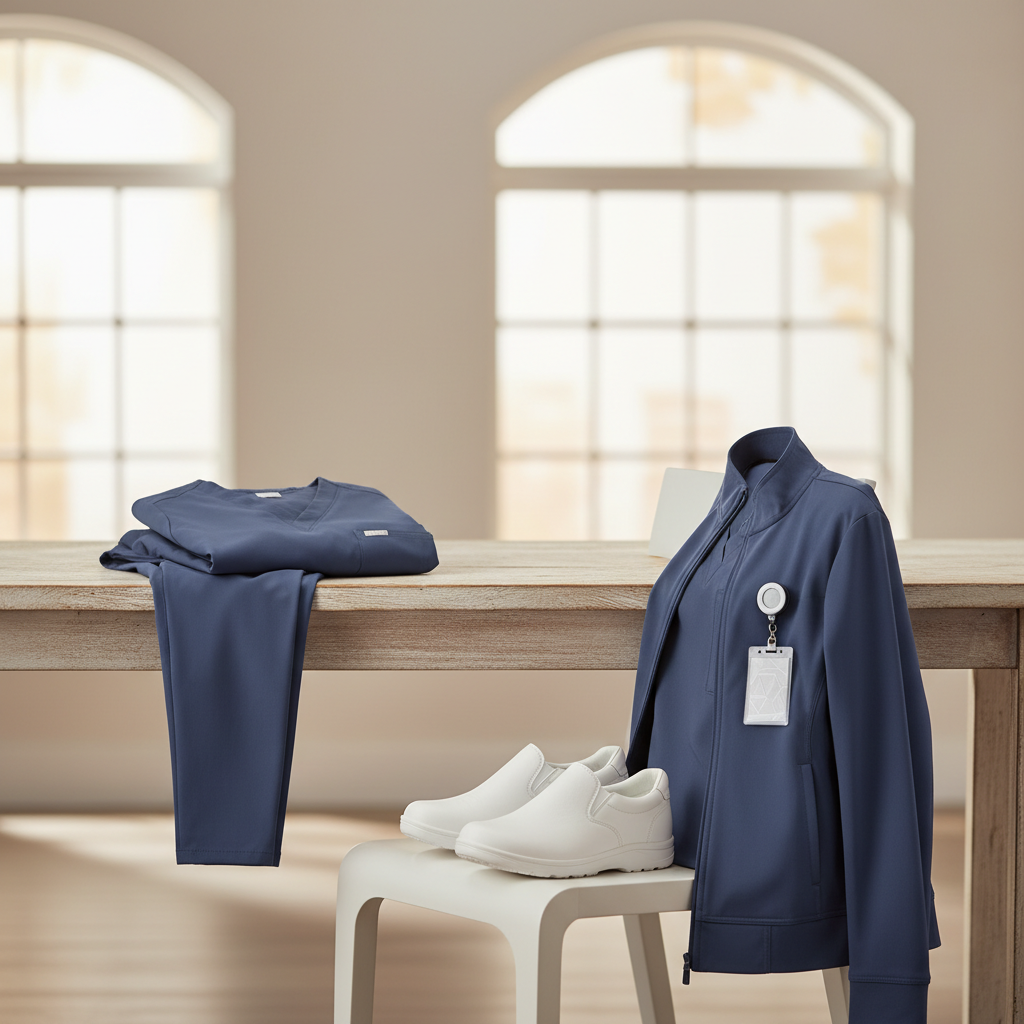
3) Accessories: keep it intentional, keep it minimal
- Badge reels: one clean design can add personality without clutter.
- Watches: some facilities restrict wristwear in certain areas, check policy.
- Jewelry: smaller is usually safer; avoid anything that catches on gloves or patients.
According to OSHA resources on workplace safety, employers set controls to reduce exposure risks, so if your unit limits specific items, treat that as a non-negotiable and style within the lines.
Common mistakes that make scrubs look less fashionable
- Buying unisex cuts by default: they can work, but many people need a more shaped pattern to avoid the “bag” look.
- Overloading pockets: it’s practical, but it can distort the fit; consider spreading items across pockets or using a slim organizer if allowed.
- Ignoring underwear lines and fabric opacity: nude-tone undergarments and midweight fabric prevent awkward surprises.
- Too many trend details at once: jogger + bold print + loud shoes tends to look busy under clinical lighting.
If you want a simple rule, keep one “statement” element and let the rest stay quiet, a saturated solid color, a sleek shoe, or a clean printed top is usually enough.
When it’s worth getting expert help (or at least a second opinion)
If you’ve tried multiple brands and still feel uncomfortable or restricted, it may be less about fashion and more about fit needs.
- Persistent back/foot pain: consider talking with a qualified clinician; footwear and support choices can be very individual.
- Body changes: pregnancy or postpartum shifts often benefit from maternity-specific scrub patterns rather than sizing up.
- Specialty PPE requirements: ask your unit educator or supervisor which layers and fabrics comply with policy.
Comfort and safety come first, and a “stylish” look should never make you less effective on the floor.
Conclusion: a polished scrub look is mostly repeatable systems
Nurse outfit scrubs fashion gets easier when you stop chasing random sets and start dialing in fit, fabric, and a simple color plan, then you add one or two personal touches that still respect policy.
If you want a quick next step, pick your best-fitting set and use it as a benchmark, then hem the pants or upgrade one core color set so you can rotate it confidently all week.
FAQ
What colors look most “stylish” for scrubs at work?
Deep solids like navy, charcoal, and olive often look polished because they photograph well and hide lint better, but your facility policy matters more than trends.
How do I make scrubs look flattering without being too tight?
Look for shaping through seams and taper, not compression. A top that fits shoulders and skims the waist reads sharp without restricting movement.
Are jogger scrubs considered professional?
In many workplaces they are, especially in solid colors, but some facilities prefer straight-leg cuts. The professional look usually comes from clean hems and a neat fit.
How many pairs of scrubs should a nurse own?
Many nurses find 4–6 sets practical if they work multiple shifts weekly, but laundry access and uniform rules change the math, aim for enough to avoid “panic washing.”
What’s the best way to keep scrubs from fading?
Wash in cold water when possible, skip heavy heat, and avoid harsh additives that can break down dye. Always follow the garment care label since fabric blends vary.
Can I wear an undershirt with scrubs?
Often yes, but it depends on unit policy and infection-control practices. Choose a fitted layer that doesn’t interfere with hand hygiene or PPE.
How do I style scrubs if my hospital requires a specific color?
Use texture and fit to create contrast, for example, a structured top with tapered pants, and keep accessories consistent like one neutral shoe and a simple badge reel.
If you’re trying to upgrade your scrubs without wasting money, start by identifying one pain point, usually hem length, shoulder fit, or fabric weight, then shop specifically for that instead of buying whatever looks cute online.