
Elevated basic outfits are what you reach for when you want to look put-together without dressing “up,” think a clean tee and jeans, but with sharper fit, better fabric, and a few intentional details.
If your closet feels full yet you still default to the same three combinations, it’s usually not a creativity problem, it’s a styling system problem. Most outfits fall flat for a couple predictable reasons, and the fixes tend to be repeatable.
This guide stays practical: what makes basics look expensive, how to diagnose what’s making your outfit feel “meh,” and simple formulas you can copy for work, weekends, and travel. No fantasy capsule wardrobe required.
What “Elevated” Really Means (and What It Doesn’t)
“Elevated” usually means your outfit reads intentional from a few feet away. Not trendy, not loud, just clean, balanced, and finished.
- Fit: shoulders sit correctly, hems hit the right spot, nothing pulls or collapses.
- Fabric: thicker knits, structured cotton, wool blends, denim with body.
- Color story: fewer competing colors, more neutrals with one accent.
- Details: a proper belt, sleek shoes, simple jewelry, tidy hair and grooming.
What it doesn’t require: designer logos, uncomfortable heels, or a closet overhaul. Many people “upgrade” the wrong thing, like adding a statement bag while keeping a stretched-out tee, the foundation still looks casual.
Why Basic Outfits Look Flat: The Usual Culprits
When basics don’t land, the issue tends to be one of these, and yes, you can fix them without turning your life into a fashion project.
- Proportions are off: long top + long jacket + wide pants can look heavy, while skinny jeans + tiny top can feel dated depending on styling.
- Too many “soft” pieces: slouchy tee, stretchy leggings, flimsy cardigan, comfy, but visually mushy.
- Visible wear: pilling, faded black, warped collars, scuffed shoes steal polish fast.
- Accessories mismatch: athletic sneakers with a tailored coat, or a bulky backpack with a sleek outfit, the vibe splits.
- No finishing touch: even great basics can look unfinished without one intentional element.
According to CFDA (Council of Fashion Designers of America), craftsmanship and quality materials are core to what people perceive as “quality” in clothing, which maps pretty directly to why fabric and construction matter for elevated basics.
Quick Self-Check: Which Category Are You In?
Before you shop, it helps to identify the bottleneck. Pick the closest match.
- “My outfits feel casual no matter what”: likely too many soft/stretch pieces, or shoes/bag keep pulling casual.
- “I look sloppy by midday”: fabric choice and wrinkles, plus shoes that crease or scuff easily.
- “I can’t make basics look modern”: proportions and hem lengths, not necessarily the items.
- “I hate how my jeans/top fit”: tailoring, rise, inseam, shoulder fit, and bra/undergarments often solve this.
- “I buy things but nothing goes together”: color palette and repeatable outfit formulas missing.
Key point: elevated basic outfits are less about adding more, more about choosing 2–3 upgrades that fix your specific friction.
The 10-Piece Upgrade List That Changes Everything
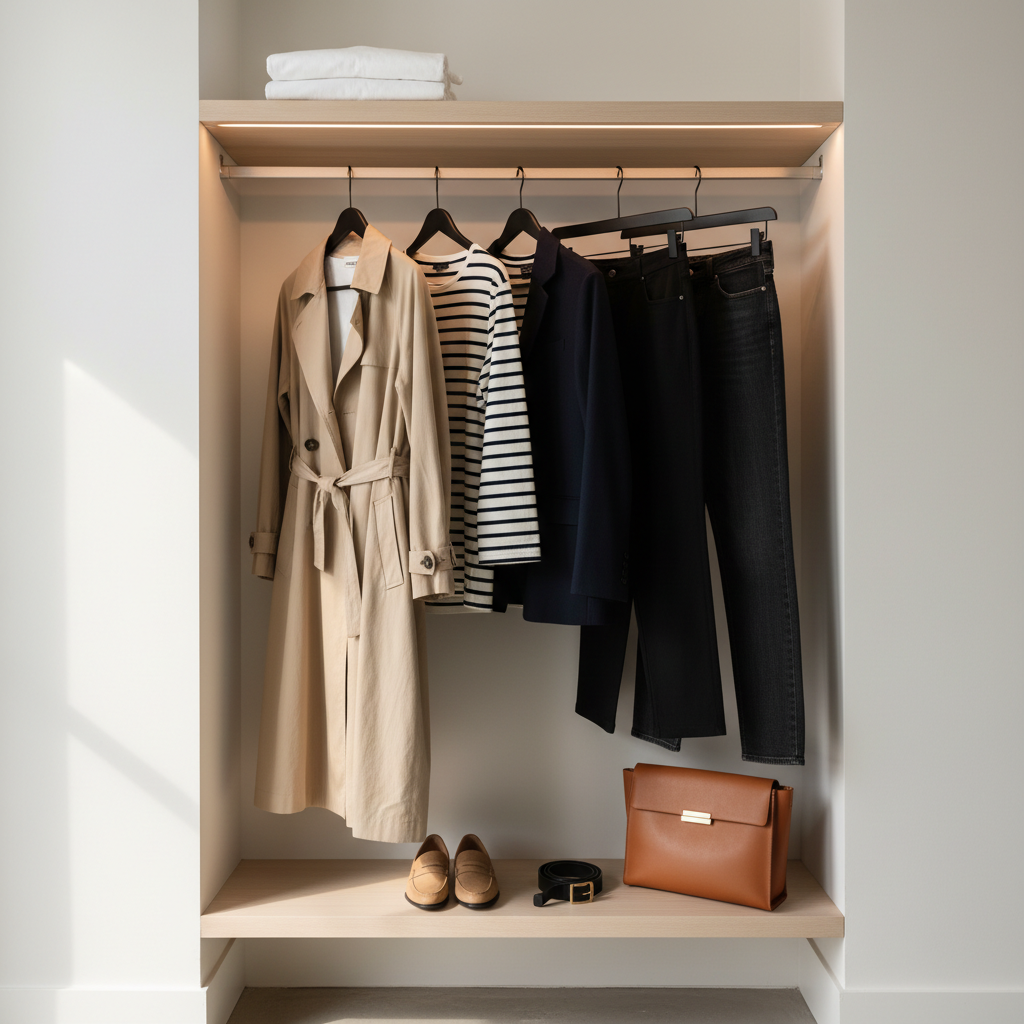
You don’t need all ten, but these tend to deliver the biggest “polish per wear” for most wardrobes.
- A structured tee (heavier cotton, crisp neckline) instead of thin jersey.
- Tailored blazer or modern chore jacket to add shape instantly.
- Trench coat or long coat with clean lapels for instant finish.
- Straight-leg jeans in a dark or true mid wash, minimal distressing.
- One great trouser (ankle or full length) with a flattering rise.
- Button-down or crisp poplin shirt for texture and structure.
- Minimal sneakers (clean leather or sleek profile) plus one dressier shoe (loafer, ballet flat, low heel).
- A real belt (not too wide, simple buckle).
- Everyday bag with some structure, even a tote can be structured.
- Simple jewelry (small hoops, chain, watch) for a “finished” signal.
If you’re budget-sensitive, prioritize shoes, outerwear, and a structured bag. They’re the first things people notice, and they take the most visual space.
Simple Outfit Formulas (Copy, Don’t Overthink)
These are easy “plug and play” combos. The trick is to keep one element structured and one element relaxed, that balance reads modern.
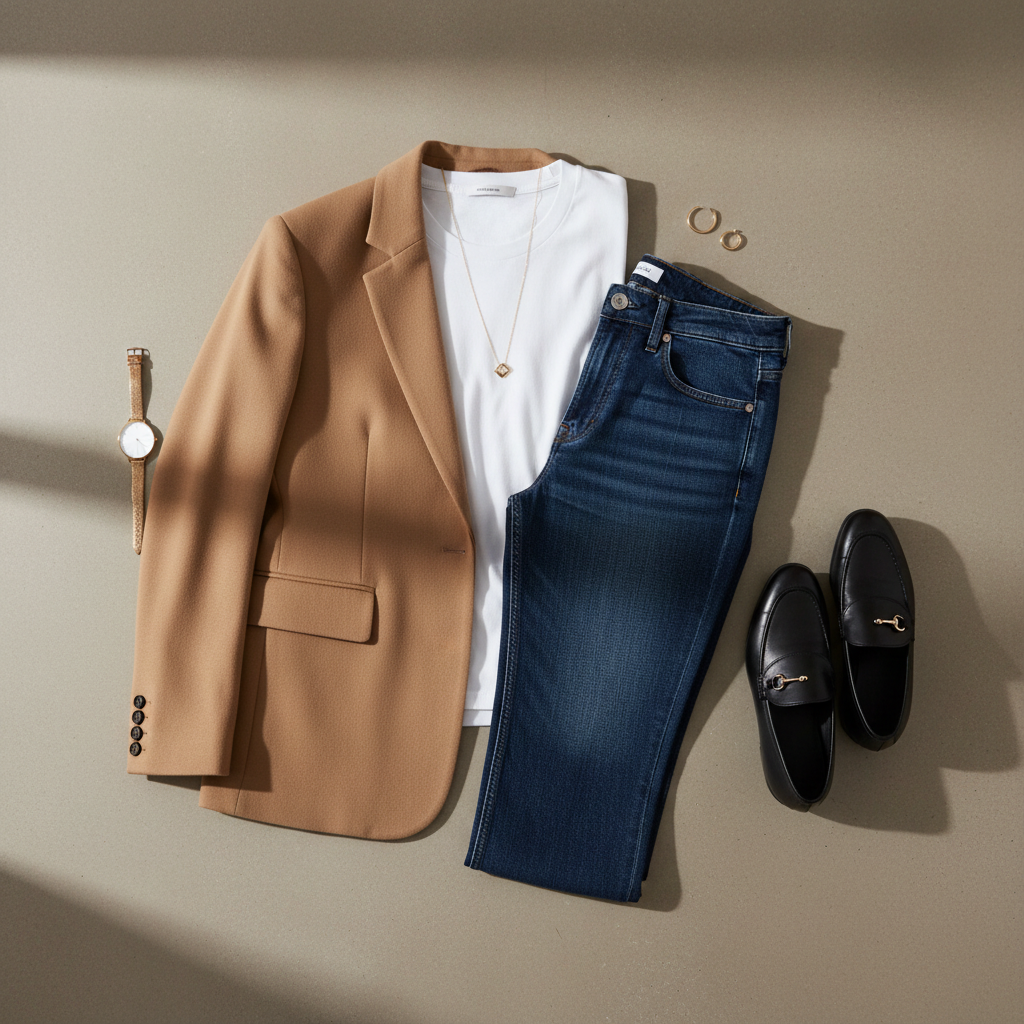
Formula 1: Tee + Straight Jeans + Blazer
- Choose a tee with a firm collar and sleeves that don’t flare.
- Add loafers or sleek sneakers and a belt to define the waist.
- Optional: small hoops and a watch, keep it quiet.
Formula 2: Button-Down + Knit Tank + Trouser
- Wear the shirt open like a light jacket for structure.
- Swap sneakers for sandals or flats to change the mood fast.
Formula 3: Knit Set or Sweater + Slip Skirt
- Keep the knit fitted at the shoulder, avoid overly slouchy.
- Choose a skirt that skims, not clings, for an elevated drape.
Formula 4: Monochrome Base + One Contrast Layer
- All black, all cream, or all navy works, then add a camel coat or denim jacket.
- Match shoe tone to the outfit to elongate, especially with cropped pants.
Rotate these formulas across seasons, and your elevated basic outfits start to feel effortless because you’re repeating a system, not reinventing daily.
Make Basics Look Expensive: A Practical Checklist
Small moves, big payoff. When something feels “off,” check these before you change the whole outfit.
- Steam or de-wrinkle: wrinkles can cancel out a great silhouette.
- Fix the hem: pants stacking oddly at the ankle reads careless, hemming is usually cheap and high impact.
- Swap one item for structure: blazer instead of cardigan, poplin shirt instead of thin tee.
- Upgrade footwear: clean soles, minimal branding, polished leather or suede.
- Limit the palette: 2–3 colors max, then repeat one color in shoes/belt/bag.
- Choose intentional skin: a neat neckline, a cuffed sleeve, a half-tuck, subtle, but it signals thought.
According to FTC guidance on textile labeling and care, following care instructions helps preserve garment performance and appearance, which is a boring detail that quietly matters for looking polished day to day.
Style by Scenario: Work, Weekend, Travel
Context matters. A look can be elevated and still wrong for the room, so here are realistic tweaks.
Work (business casual to smart casual)
- Start with trousers + knit top, then add a blazer or trench.
- Keep sneakers minimal, but many offices still read loafers as “safer.”
- A structured tote beats a slouchy bag when you need polish.
Weekend errands
- Leggings can work if the top layer has structure, like a long coat or crisp overshirt.
- Match athleisure with clean accessories, avoid mixing three different “sport” vibes at once.
Travel days
- Choose wrinkle-resistant knits and darker colors to hide wear.
- Layer with a coat that holds shape, and keep jewelry minimal for comfort and security.
If safety is a concern while traveling, it may help to keep valuables low-key and avoid flashy items, and if you’re unsure about local conditions, consider checking guidance from official sources.
Common Mistakes (That Waste Money) + What to Do Instead
- Mistake: Buying “better” pieces without fixing fit. Do this: tailor hems, adjust waist, and prioritize shoulder fit.
- Mistake: Trend shopping to feel current. Do this: modernize proportions, like a straighter jean or a slightly boxy blazer.
- Mistake: Too many hero pieces, not enough basics. Do this: build around 2–3 reliable formulas, then add one accent.
- Mistake: Ignoring shoes and bags. Do this: keep footwear clean, rotate to reduce wear, and store bags so they keep shape.
At-a-Glance: Simple Upgrades and Their Impact
If you like a quick decision tool, this table helps you prioritize.
| Upgrade | Why it elevates | Best for |
|---|---|---|
| Tailoring hems | Sharp proportions, cleaner lines | Jeans, trousers, skirts |
| Structured outerwear | Adds shape over simple basics | Work, travel, everyday |
| Better shoes | Instant polish, reduces “too casual” feel | Any outfit that feels unfinished |
| Limited color palette | Looks intentional, easier to mix | Capsules, busy mornings |
| Higher-weight basics | Drape and opacity read more premium | T-shirts, knits, tanks |
Conclusion: Your “Elevated Basics” Plan for This Week
The easiest way to build elevated basic outfits is to stop chasing more options and start tightening the foundation: one great pair of jeans or trousers, one structured layer, and shoes that match the level of polish you want.
Try this: pick one outfit formula above, wear it twice this week with different shoes or a different layer, then note what felt off. That note becomes your next smart upgrade instead of another random purchase.
FAQ
How do I make basic outfits look elevated without buying new clothes?
Start with fit and finishing. Steam wrinkles, clean shoes, add a belt, and adjust proportions with a tuck or a cuff. Often one structured layer you already own, like a blazer, does more than a new top.
What colors work best for elevated basic outfits?
Neutrals tend to do the heavy lifting: black, white, cream, navy, gray, camel, olive. If you like color, keep it to one accent and repeat it subtly, like a bag that matches your shoes.
Are sneakers okay for an elevated look?
Usually yes, if the sneakers are clean, minimal, and in good shape. Pair them with structured pieces like a trench or blazer so the outfit doesn’t lean fully athletic.
What jeans look most “polished” right now?
Straight-leg and slim-straight cuts in a dark or classic mid wash read polished in many settings. Heavy distressing and overly thin denim can skew casual.
How many pieces do I need for a simple elevated wardrobe?
Many people do well with a small core: 2–3 tops, 2 bottoms, 1–2 layers, and 2 shoe options that cover casual and slightly dressier days. The repeatable formulas matter more than the count.
What’s the fastest “one change” upgrade?
Shoes, almost always. A basic outfit with sleek loafers or clean leather sneakers typically reads more intentional than the same outfit with worn runners.
Do elevated basics work for different body types?
Yes, but the best choices vary. Focus on shoulder fit, rise, and hem placement, and consider a tailor if you often struggle with gaps at the waist or awkward lengths.
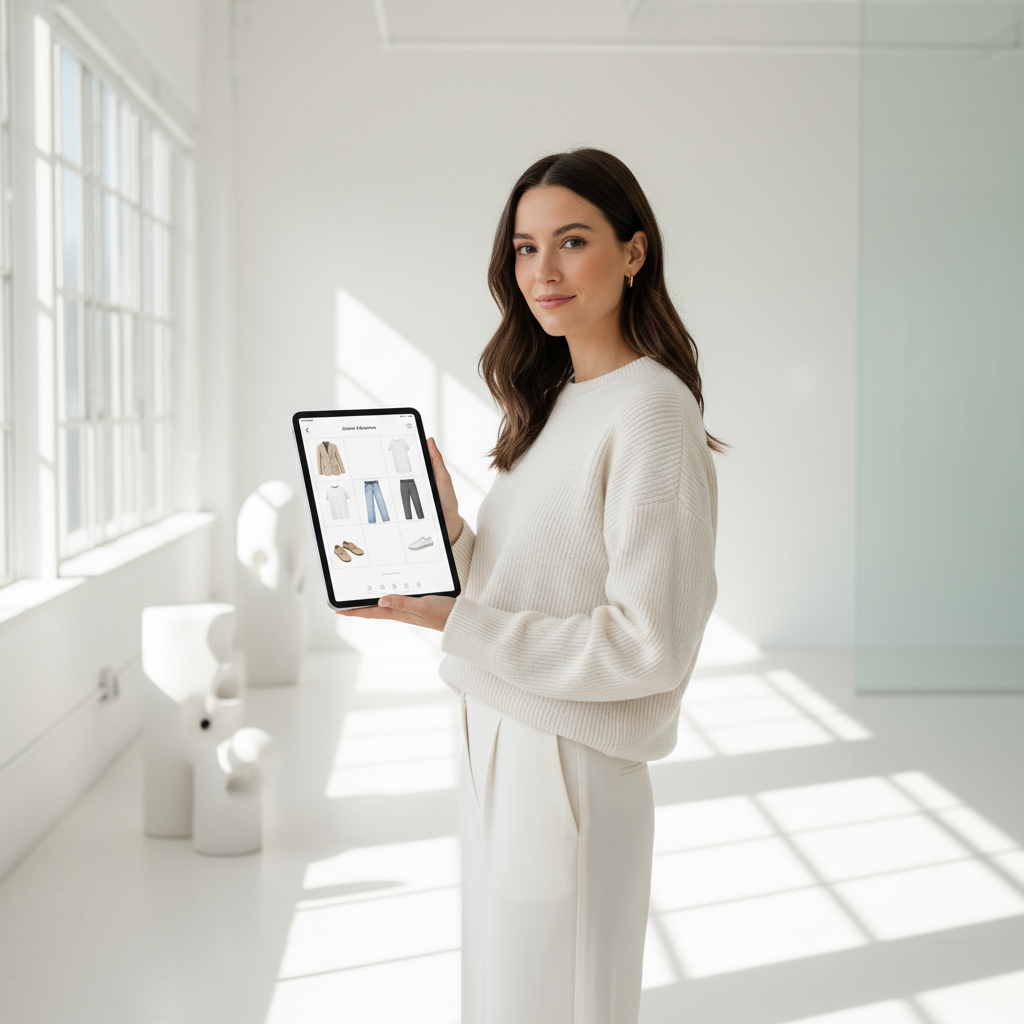
If you’re building elevated basic outfits and want a simpler path, it can help to audit your closet around two outfit formulas, list the missing “gap” pieces, and shop only for those, it keeps your style consistent and your spending calmer.